#include <OutputMgr.hpp>
|
| | c_OutputMgr () |
| | < Start up the driver and put it into a safe mode
|
| |
| virtual | ~c_OutputMgr () |
| | < deallocate any resources and put the output channels into a safe state
|
| |
| void | Begin () |
| | set up the operating environment based on the current config (or defaults)
|
| |
| void | Poll () |
| | Call from loop(), renders output data.
|
| |
| void | ScheduleLoadConfig () |
| |
| void | LoadConfig () |
| | Read the current configuration data from nvram.
|
| |
| void | GetConfig (byte *Response, uint32_t maxlen) |
| |
| void | GetConfig (String &Response) |
| |
| void | SetConfig (const char *NewConfig) |
| | Save the current configuration data to nvram.
|
| |
| void | SetConfig (ArduinoJson::JsonDocument &NewConfig) |
| | Save the current configuration data to nvram.
|
| |
| void | GetStatus (JsonObject &jsonStatus) |
| |
| IRAM_ATTR uint8_t * | ISR_GetBufferAddress () |
| | Get the address of the buffer into which the E1.31 handler will stuff data.
|
| |
| uint32_t | GetBufferUsedSize () |
| | Get the size (in intensities) of the buffer into which the E1.31 handler will stuff data.
|
| |
| uint32_t | GetBufferSize () |
| | Get the size (in intensities) of the buffer into which the E1.31 handler will stuff data.
|
| |
| void | DeleteConfig () |
| |
| void | PauseOutputs (bool NewState) |
| |
| void | GetDriverName (String &Name) |
| |
| void | WriteChannelData (uint32_t StartChannelId, uint32_t ChannelCount, uint8_t *pData) |
| |
| void | ReadChannelData (uint32_t StartChannelId, uint32_t ChannelCount, uint8_t *pTargetData) |
| |
| void | ClearBuffer () |
| |
| void | TaskPoll () |
| |
| void | RelayUpdate (uint8_t RelayId, String &NewValue, String &Response) |
| |
| void | ClearStatistics (void) |
| |
| uint8_t | GetNumPorts () |
| |
◆ e_OutputProtocolType
| Enumerator |
|---|
| OutputProtocol_Disabled | |
| OutputProtocol_Last | |
◆ c_OutputMgr()
| c_OutputMgr::c_OutputMgr |
( |
| ) |
|
< Start up the driver and put it into a safe mode
◆ ~c_OutputMgr()
| c_OutputMgr::~c_OutputMgr |
( |
| ) |
|
|
virtual |
< deallocate any resources and put the output channels into a safe state
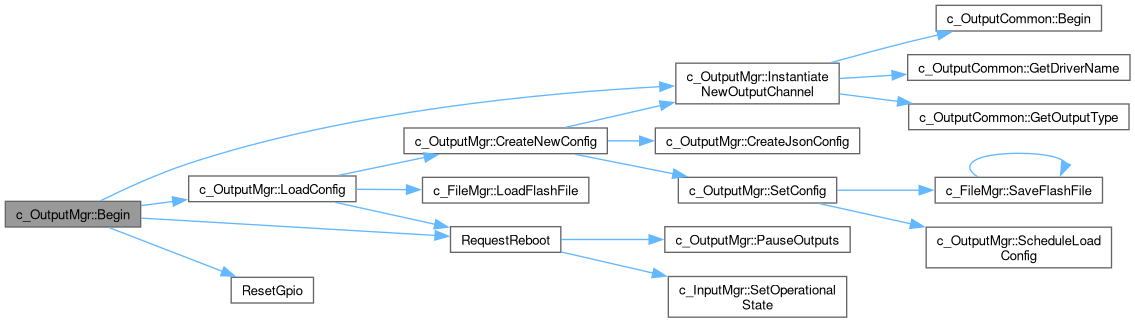
◆ Begin()
| void c_OutputMgr::Begin |
( |
| ) |
|
set up the operating environment based on the current config (or defaults)
< Start the module
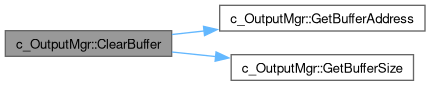
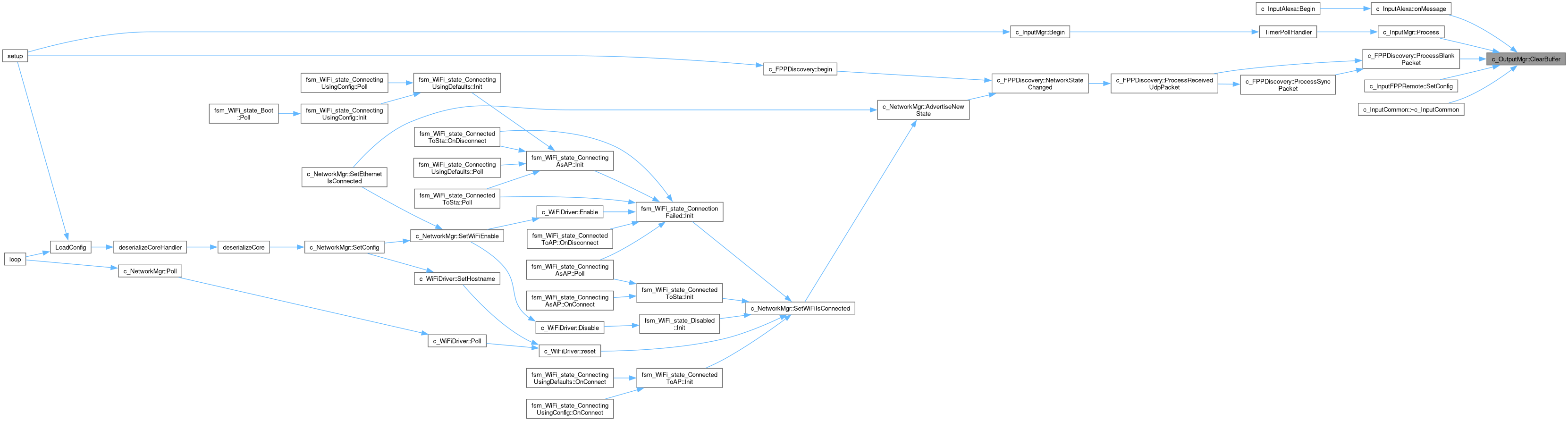
◆ ClearBuffer()
| void c_OutputMgr::ClearBuffer |
( |
| ) |
|
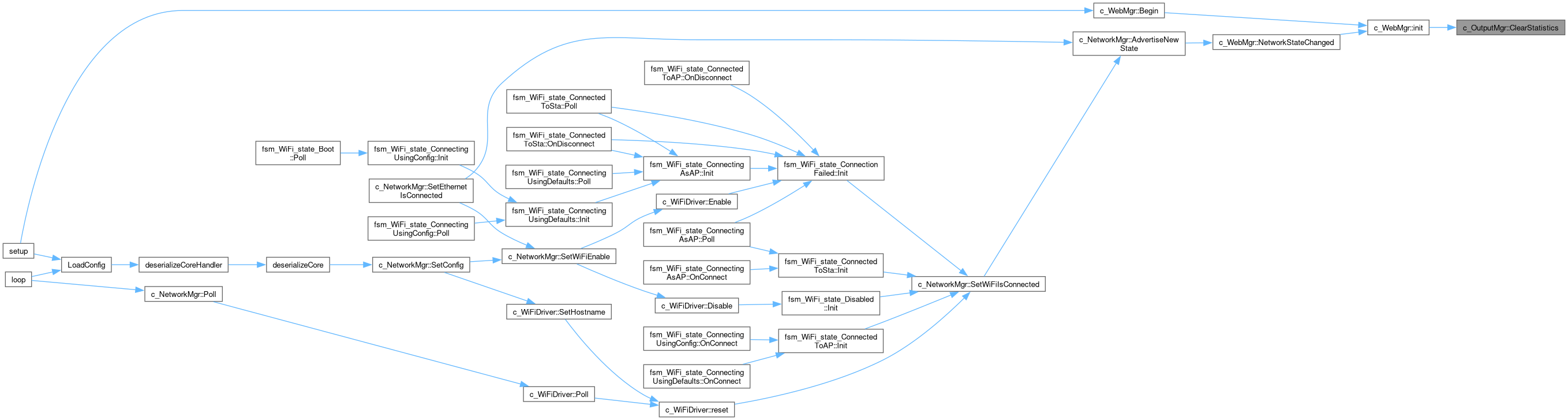
◆ ClearStatistics()
| void c_OutputMgr::ClearStatistics |
( |
void | | ) |
|
◆ CreateJsonConfig()
| void c_OutputMgr::CreateJsonConfig |
( |
JsonObject & | jsonConfig | ) |
|
|
private |
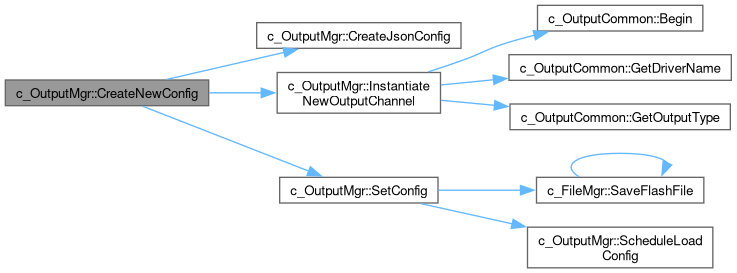
◆ CreateNewConfig()
| void c_OutputMgr::CreateNewConfig |
( |
| ) |
|
|
private |
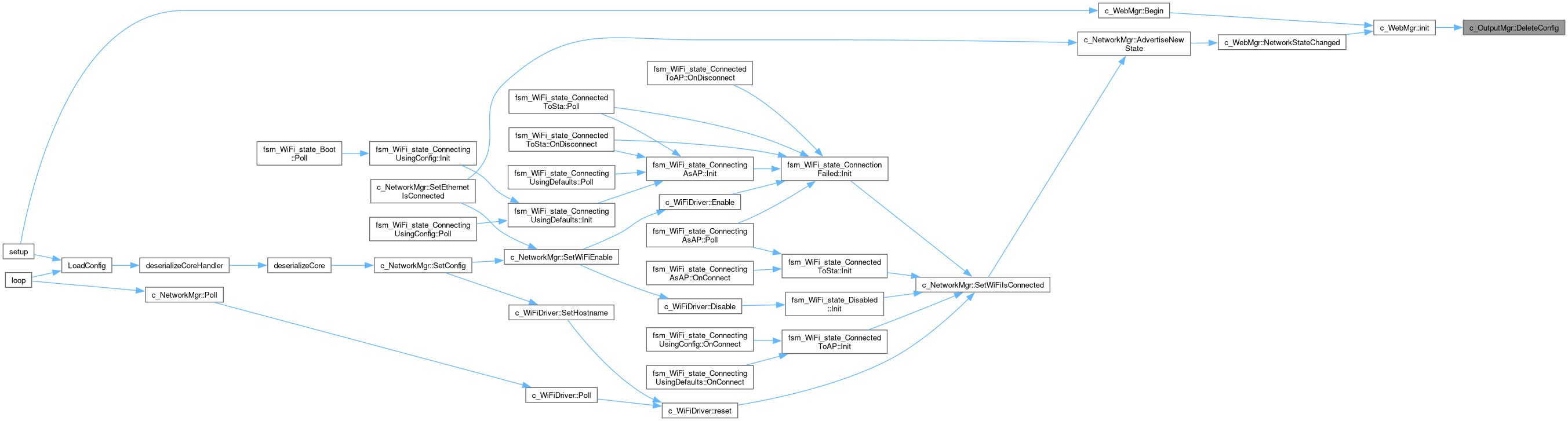
◆ DeleteConfig()
| void c_OutputMgr::DeleteConfig |
( |
| ) |
|
|
inline |
◆ FindJsonChannelConfig()
| bool c_OutputMgr::FindJsonChannelConfig |
( |
JsonDocument & | jsonConfig, |
|
|
OM_PortId_t | PortId, |
|
|
JsonObject & | ChanConfig ) |
|
private |
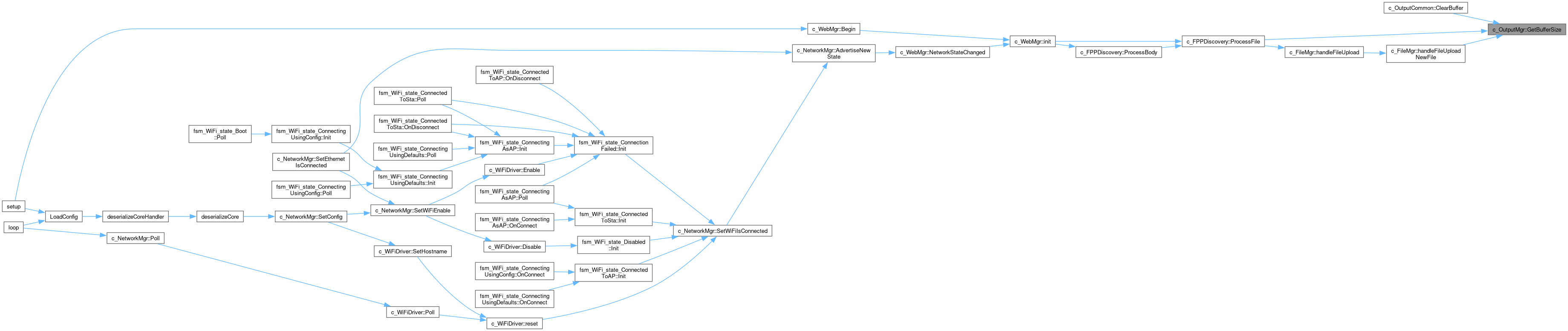
◆ GetBufferSize()
| uint32_t c_OutputMgr::GetBufferSize |
( |
| ) |
|
|
inline |
Get the size (in intensities) of the buffer into which the E1.31 handler will stuff data.
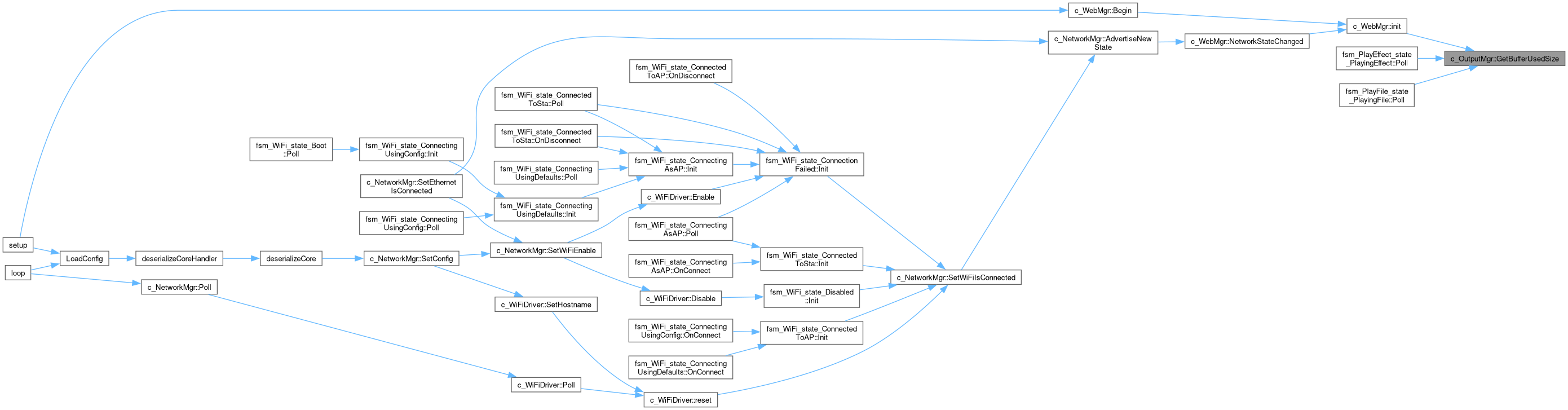
◆ GetBufferUsedSize()
| uint32_t c_OutputMgr::GetBufferUsedSize |
( |
| ) |
|
|
inline |
Get the size (in intensities) of the buffer into which the E1.31 handler will stuff data.
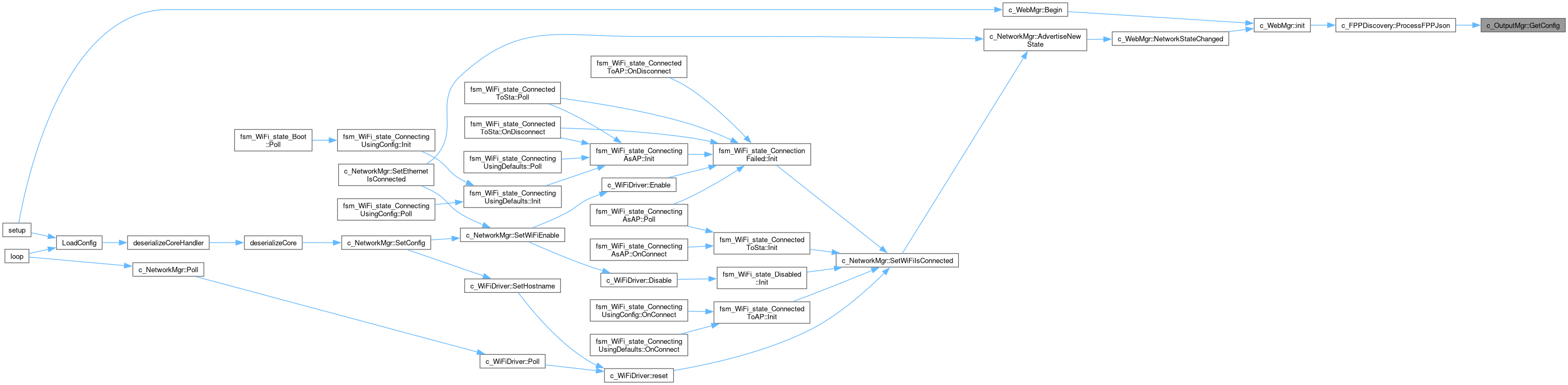
◆ GetConfig() [1/2]
| void c_OutputMgr::GetConfig |
( |
byte * | Response, |
|
|
uint32_t | maxlen ) |
◆ GetConfig() [2/2]
| void c_OutputMgr::GetConfig |
( |
String & | Response | ) |
|
◆ GetDriverName()
| void c_OutputMgr::GetDriverName |
( |
String & | Name | ) |
|
|
inline |
◆ GetNumPorts()
| uint8_t c_OutputMgr::GetNumPorts |
( |
| ) |
|
|
inline |
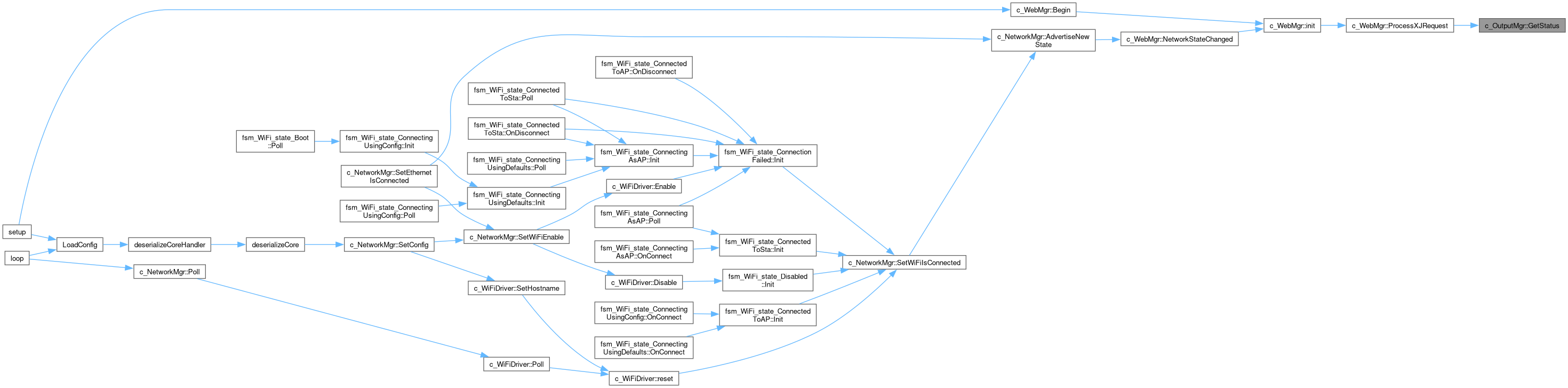
◆ GetStatus()
| void c_OutputMgr::GetStatus |
( |
JsonObject & | jsonStatus | ) |
|
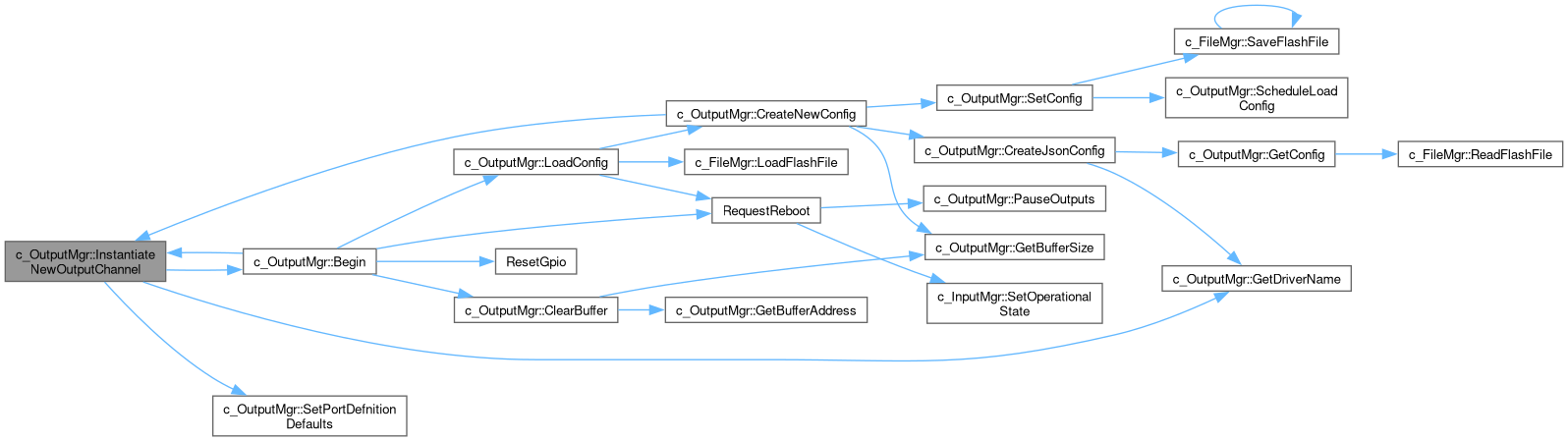
◆ InstantiateNewOutputChannel()
| void c_OutputMgr::InstantiateNewOutputChannel |
( |
uint32_t | PortIndex, |
|
|
e_OutputProtocolType | NewChannelType, |
|
|
bool | StartDriver = true ) |
|
private |
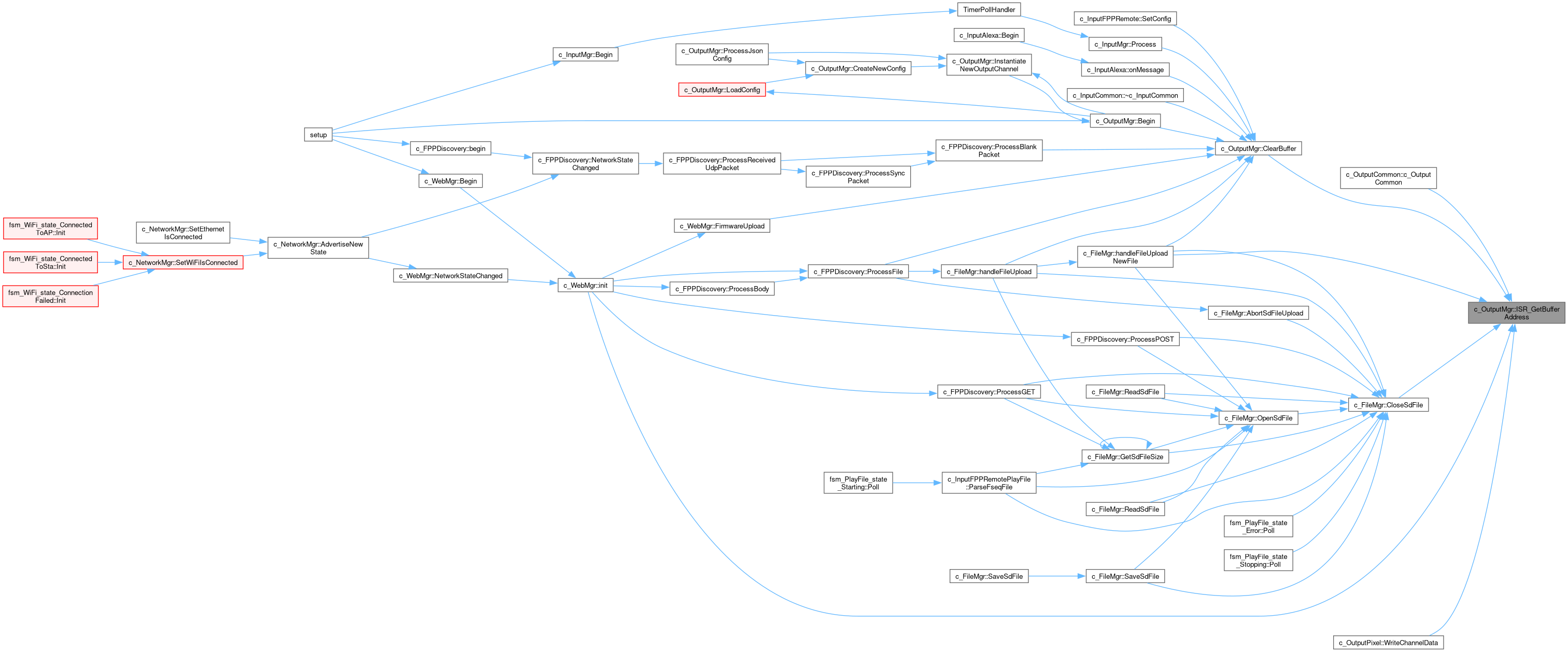
◆ ISR_GetBufferAddress()
| IRAM_ATTR uint8_t * c_OutputMgr::ISR_GetBufferAddress |
( |
| ) |
|
|
inline |
Get the address of the buffer into which the E1.31 handler will stuff data.
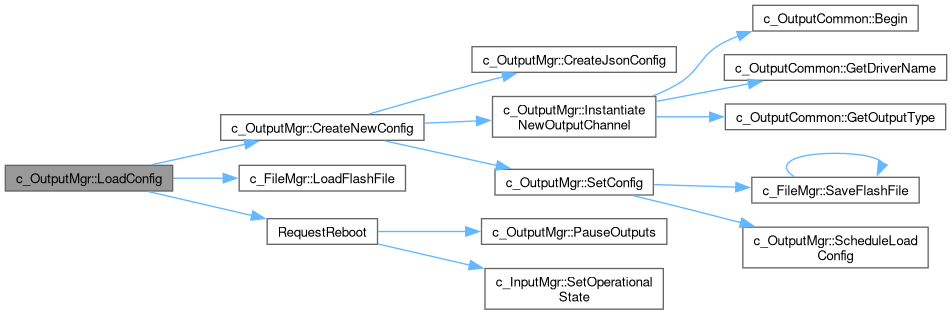
◆ LoadConfig()
| void c_OutputMgr::LoadConfig |
( |
| ) |
|
Read the current configuration data from nvram.
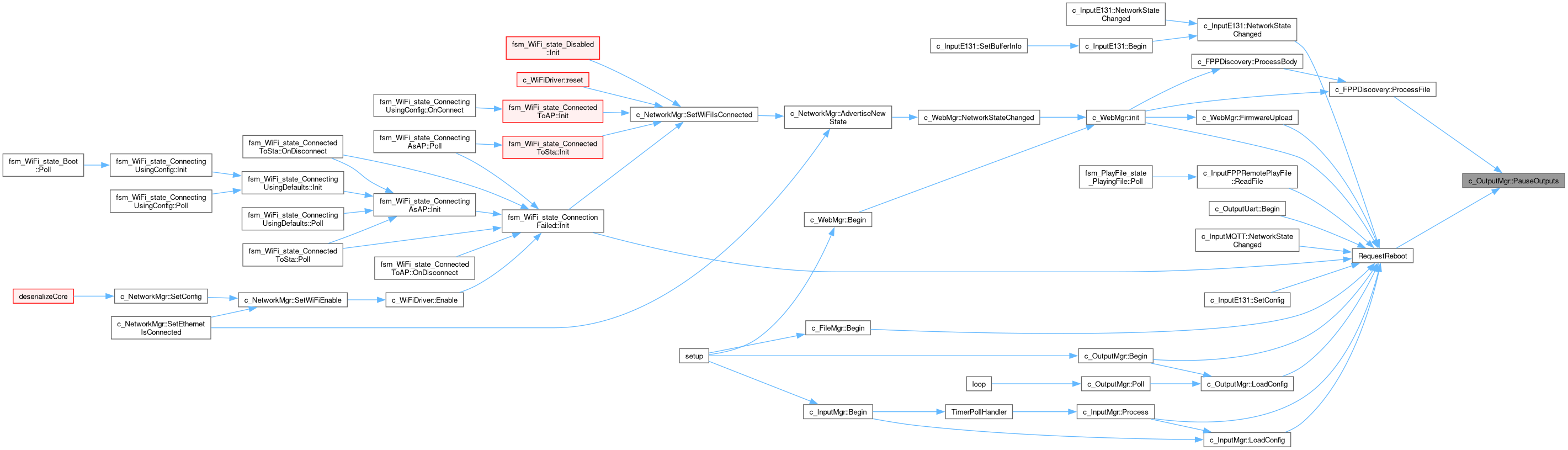
◆ PauseOutputs()
| void c_OutputMgr::PauseOutputs |
( |
bool | NewState | ) |
|
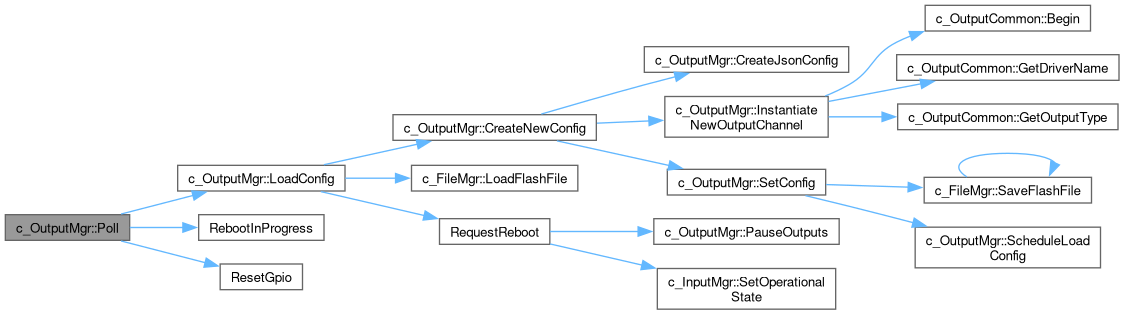
◆ Poll()
| void c_OutputMgr::Poll |
( |
| ) |
|
Call from loop(), renders output data.
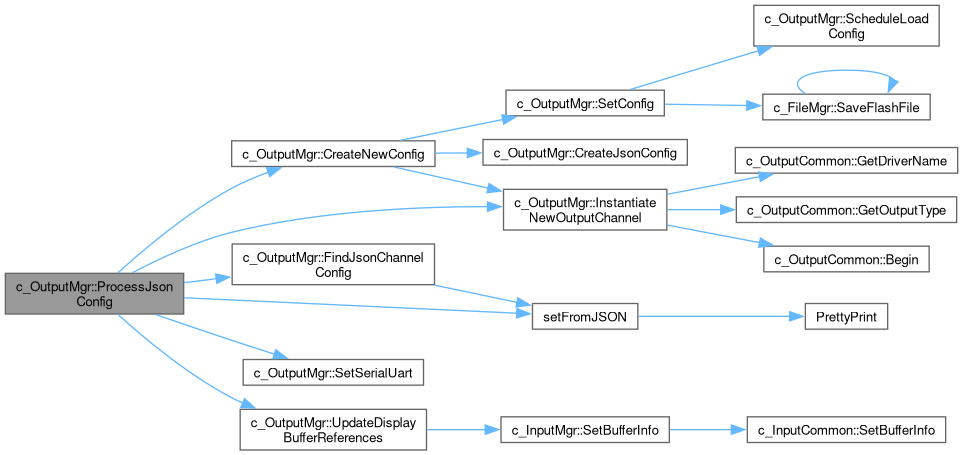
◆ ProcessJsonConfig()
| bool c_OutputMgr::ProcessJsonConfig |
( |
JsonDocument & | jsonConfig | ) |
|
|
private |
◆ ReadChannelData()
| void c_OutputMgr::ReadChannelData |
( |
uint32_t | StartChannelId, |
|
|
uint32_t | ChannelCount, |
|
|
uint8_t * | pTargetData ) |
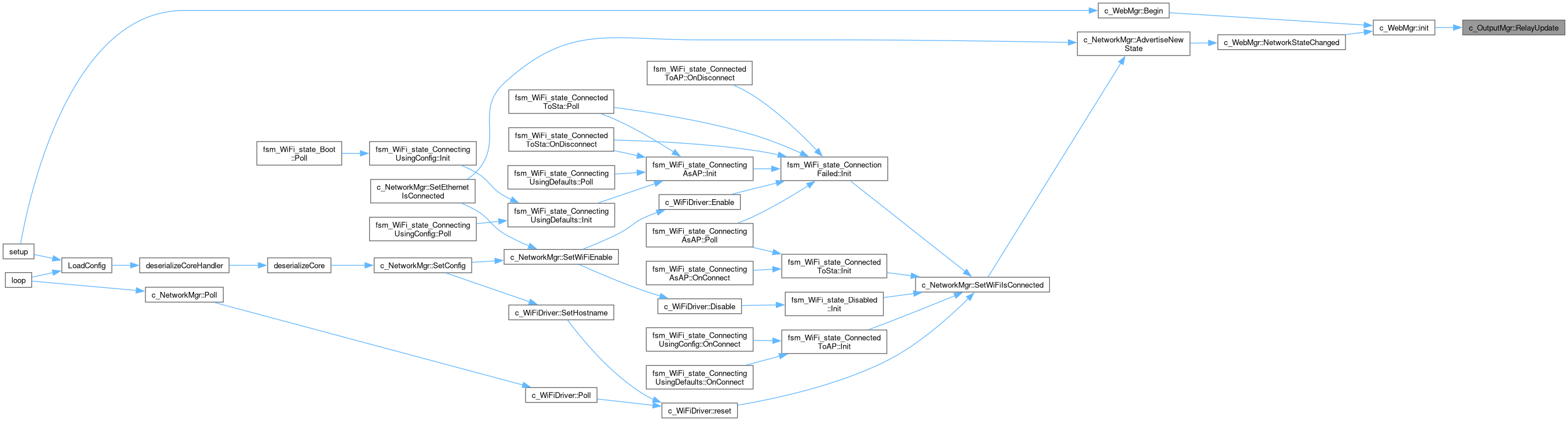
◆ RelayUpdate()
| void c_OutputMgr::RelayUpdate |
( |
uint8_t | RelayId, |
|
|
String & | NewValue, |
|
|
String & | Response ) |
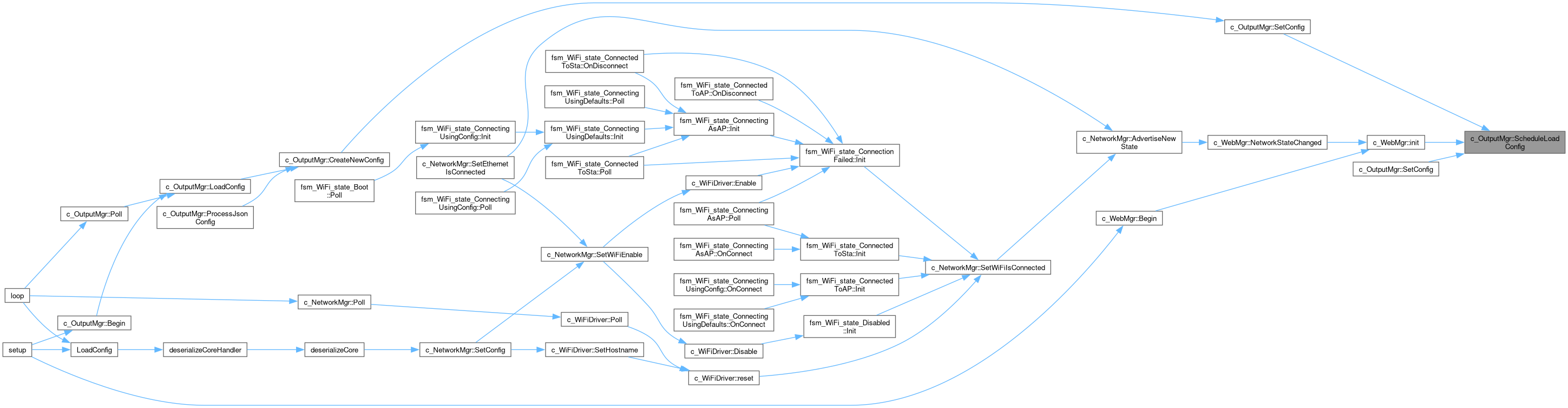
◆ ScheduleLoadConfig()
| void c_OutputMgr::ScheduleLoadConfig |
( |
| ) |
|
|
inline |
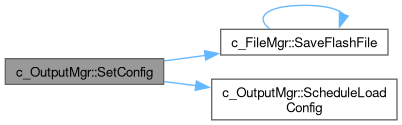
◆ SetConfig() [1/2]
| void c_OutputMgr::SetConfig |
( |
ArduinoJson::JsonDocument & | NewConfig | ) |
|
Save the current configuration data to nvram.
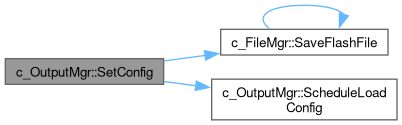
◆ SetConfig() [2/2]
| void c_OutputMgr::SetConfig |
( |
const char * | NewConfig | ) |
|
Save the current configuration data to nvram.
◆ SetPortDefnitionDefaults()
| bool c_OutputMgr::SetPortDefnitionDefaults |
( |
uint32_t | PortIndex, |
|
|
e_OutputProtocolType | TargetProtocolType ) |
|
private |
◆ SetSerialUart()
| void c_OutputMgr::SetSerialUart |
( |
| ) |
|
|
private |
◆ TaskPoll()
| void c_OutputMgr::TaskPoll |
( |
| ) |
|
◆ UpdateDisplayBufferReferences()
| void c_OutputMgr::UpdateDisplayBufferReferences |
( |
void | | ) |
|
|
private |
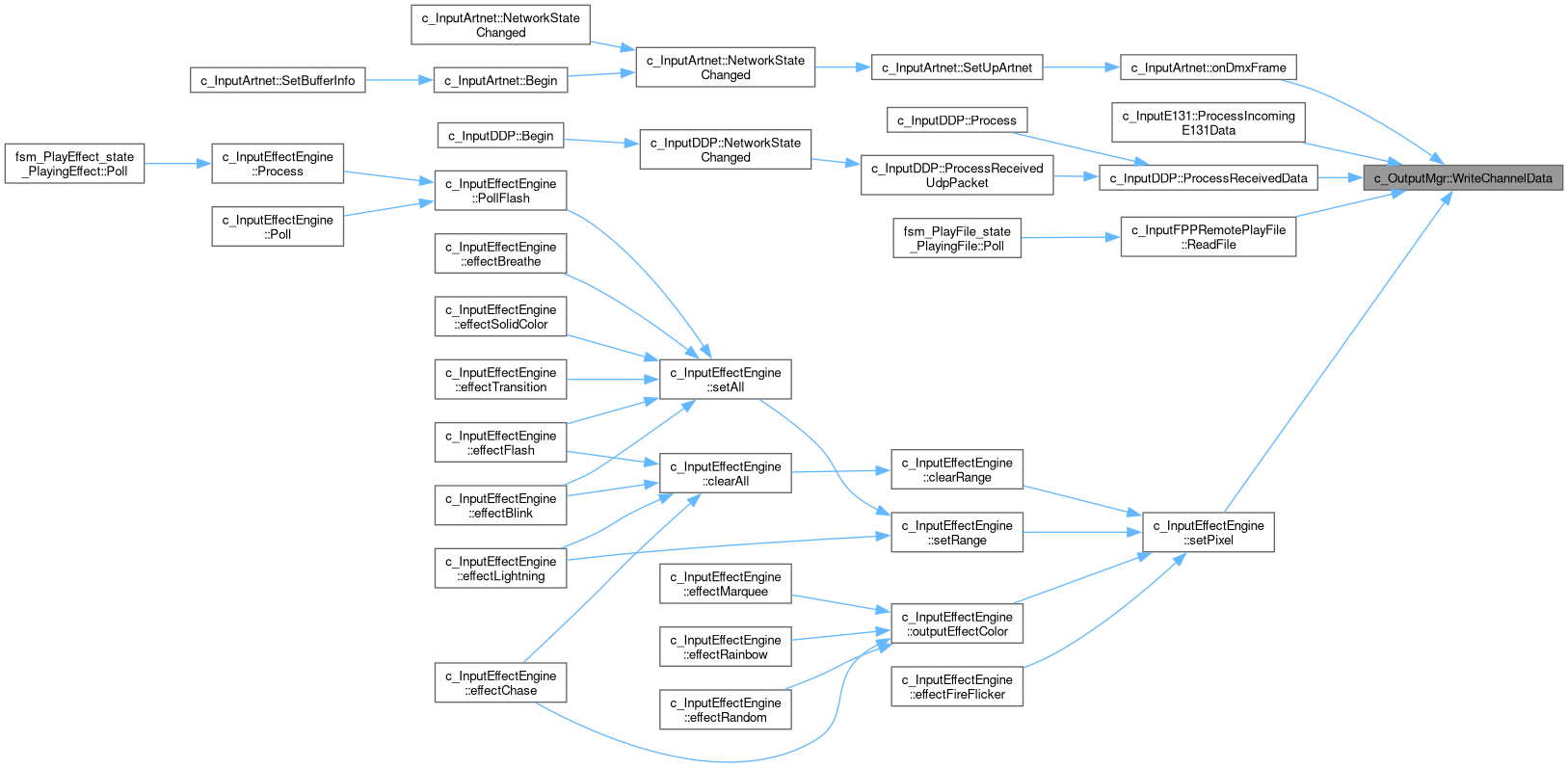
◆ WriteChannelData()
| void c_OutputMgr::WriteChannelData |
( |
uint32_t | StartChannelId, |
|
|
uint32_t | ChannelCount, |
|
|
uint8_t * | pData ) |
◆ BuildingNewConfig
| bool c_OutputMgr::BuildingNewConfig = false |
|
private |
◆ ConfigFileName
| String c_OutputMgr::ConfigFileName |
|
private |
◆ ConfigInProgress
| bool c_OutputMgr::ConfigInProgress = false |
|
private |
◆ ConfigLoadNeeded
◆ ConsoleRxGpio
◆ ConsoleTxGpio
◆ HasBeenInitialized
| bool c_OutputMgr::HasBeenInitialized = false |
|
private |
◆ NumberOfOutputProtocols
| uint32_t c_OutputMgr::NumberOfOutputProtocols = uint32_t(0) |
◆ NumOutputPorts
| uint8_t c_OutputMgr::NumOutputPorts |
|
private |
◆ OutputIsPaused
| bool c_OutputMgr::OutputIsPaused = false |
|
private |
◆ pOutputBuffer
| uint8_t* c_OutputMgr::pOutputBuffer = nullptr |
|
private |
◆ UsedBufferSize
| uint32_t c_OutputMgr::UsedBufferSize = 0 |
|
private |
The documentation for this class was generated from the following files: